Babies don't wait until they're older to start learning. From birth, they observe, test, and draw conclusions about everything around them. Every game, every new object, and every conversation is a lesson for their brain. You don't need formal lessons to help them: daily life already provides everything they need.
Learning through the senses
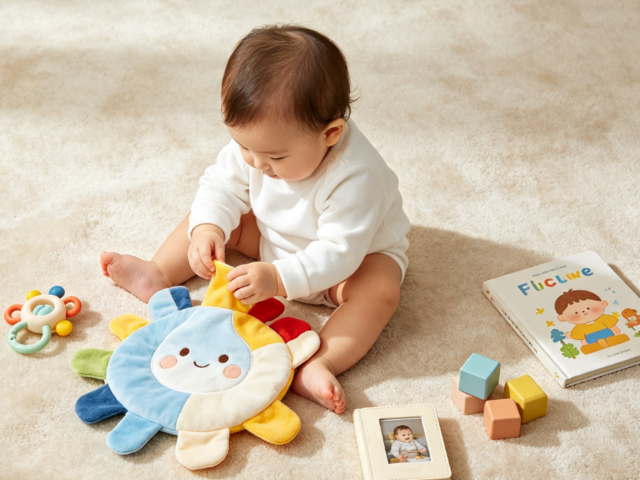
Babies get to know the world through their eyes, ears, hands, mouth, and nose. They put everything in their mouth not out of stubbornness, but to discover texture, temperature, and flavor. They touch, hit, shake, and throw objects to see what happens. When they drop a toy from the stroller and look at the floor, they are testing an idea: “What happens if I let this go?”. All of this is learning, not a mess.
The discovery that things don't disappear
Around 8 to 10 months, babies grasp a very important concept: things continue to exist even when they can't see them. Before that, if you hide a toy behind your hands, they stop looking, as if the object had vanished for good. After this discovery, they pull your hands away or look under the blanket to find what you hid. This simple shift transforms the way they explore everything around them.
The memory that provides security
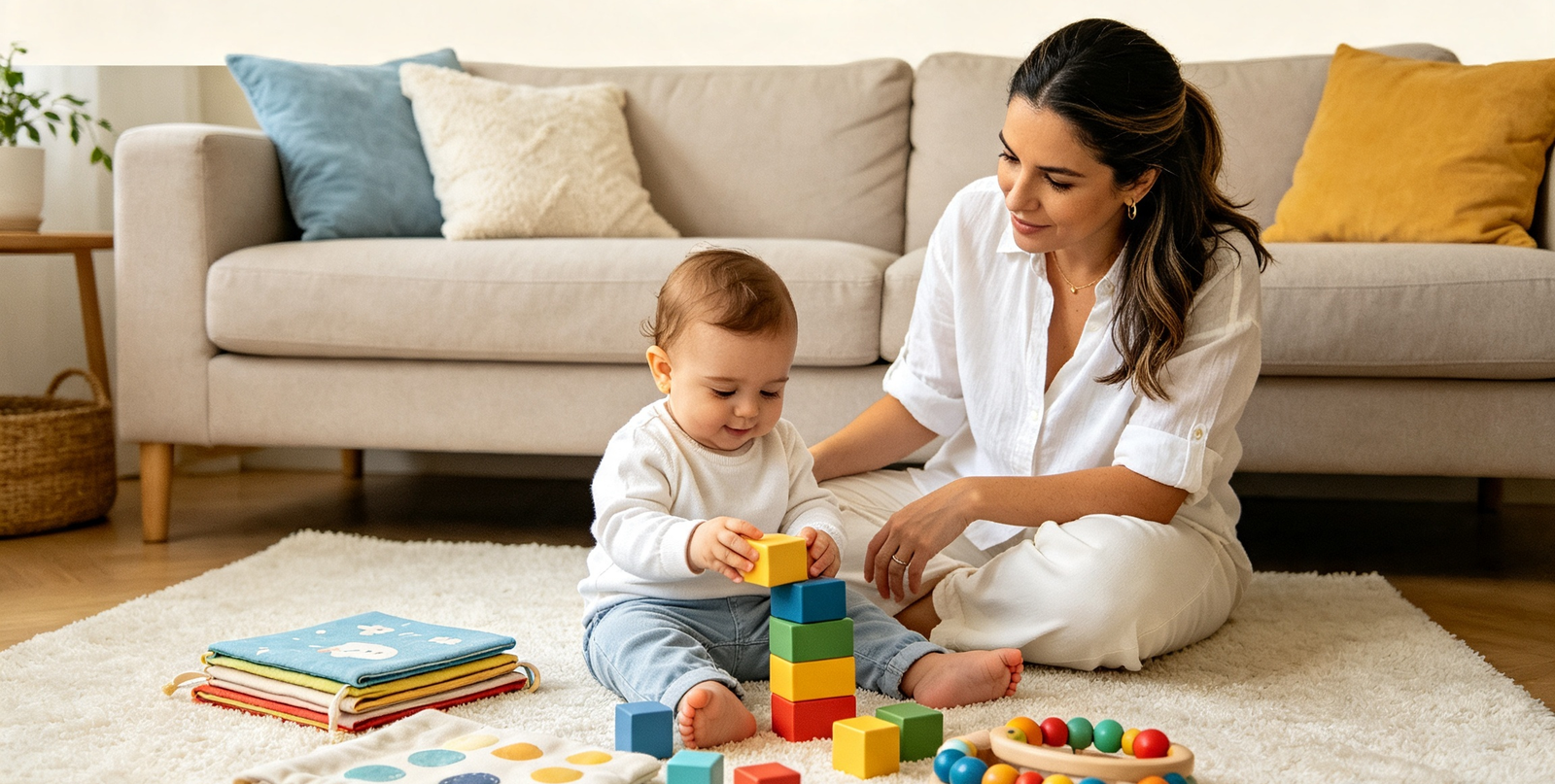
Babies begin to remember routines and people. They know that when you grab the soft towel, bath time is coming. They know that when the bottle or plate appears, food is on the way. They recognize familiar faces even after a few days without seeing them. This memory makes the world feel more predictable and safe for them.
Solving small everyday problems
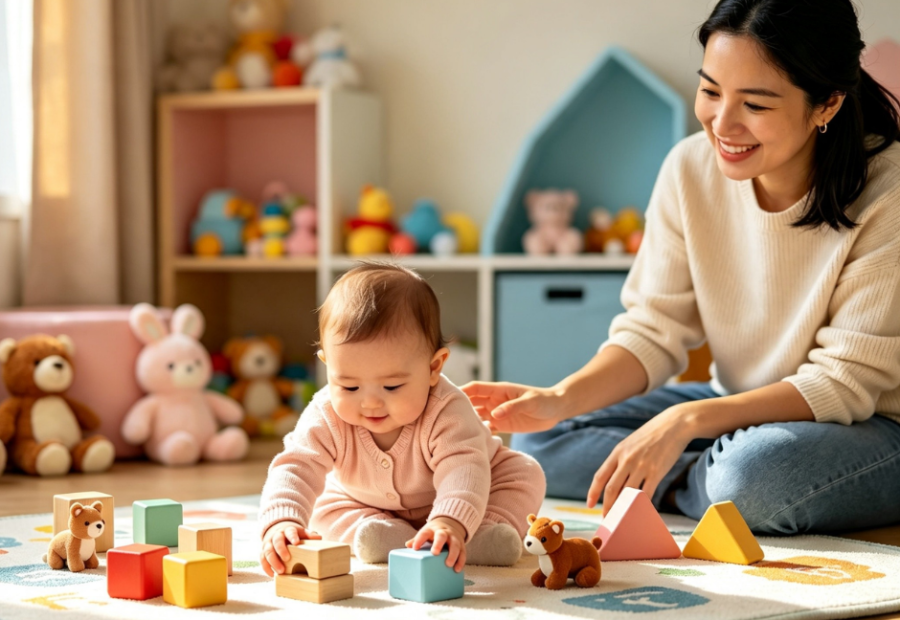
Babies test solutions for the things they want. If a toy is out of reach on the mat, they pull the blanket to bring it closer. If an object is inside a box, they try to open the lid or tip the whole box over to get it out. Every attempt, even the unsuccessful ones, teaches their brain something new. They don't need complex educational toys to learn; their own environment already offers plenty of challenges.
How to support them day by day
Offer objects of different textures, shapes, and colors for them to explore. Play peek-a-boo and hide-and-seek with small toys, always with supervision. Let them try to solve small problems on their own, such as reaching for a toy that is slightly out of reach, before stepping in to help. Talking and naming everything they see—“that's the dog,” “that's a flower,” “we are opening the window”—also helps organize ideas in their mind.
Signs to discuss with your pediatrician
Every baby learns at their own pace, but it is worth seeking guidance if they do not observe what is happening around them, do not try to reach for or grasp objects, do not show curiosity about new things, or do not seem to remember people or routines that repeat every day.
Babies learn all the time, even when they just seem to be playing. Every curious look, every attempt, and every small discovery builds the way they will see and understand the world ahead. You don't need to teach complicated lessons. Just being present, responding to their little cues, and letting them explore safely is enough.
Turn information into action. Access our planners, checklists, and digital tools to have everything you need to organize your motherhood journey in one place.
My Pregnancy Journey – Planner
https://pay.hotmart.com/A107528781GFirst 90 Days Survival Kit for Your Baby.
https://pay.hotmart.com/S107517788L