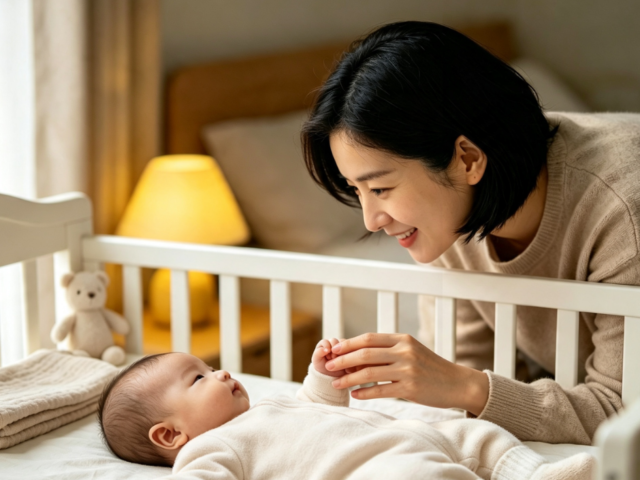
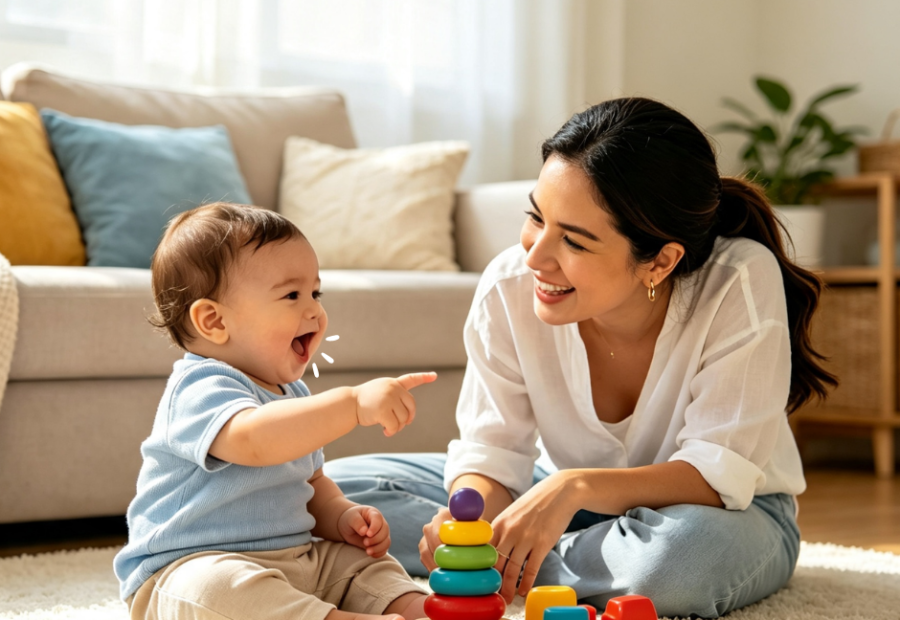
Communication begins long before the first word. It starts with a lingering gaze, a responsive smile, a cry asking to be held, and the very first sounds baby makes just to hear their own voice. Every interaction with you teaches them that connecting with others truly works and is worthwhile.
Communication before words
In the first few months, babies use their whole bodies to make themselves understood. They cry when they are hungry, uncomfortable, or missing the comfort of your arms. They smile when you speak to them and wiggle their little arms and legs with joy. Even then, they are learning a fundamental rule of conversation: when they reach out, you respond. This simple back-and-forth is the foundation for all the language that follows.
The babbling stage
Around 4 to 6 months, babbling really takes off. Your baby will repeat sounds like “ba,” “ma,” “da,” and “goo,” often just for the sheer joy of feeling their mouth move and hearing the sound that comes out. They are practicing with their tongue, lips, and breath, preparing their body to speak real words. You might notice them changing their pitch and volume, almost as if they are telling you an entire story.
Gestures that speak before words
Before they can speak, babies already know how to make themselves understood: pointing to what they want, waving “bye-bye,” and gently pulling your hand when they need help. These gestures are essential milestones. They show that your baby understands they can communicate, trusting that you will understand what they need.
The first meaningful words
Around 10 to 12 months, many babies say their very first words with real meaning. It might be “mama” to call for you, “dada” for their father, “water” when they are thirsty, or a pet's name. The words might not sound perfect at first—"dog" might sound like "do," or "milk" might be "mi"—but the meaning is crystal clear to those who care for them every day.
How to support them day by day
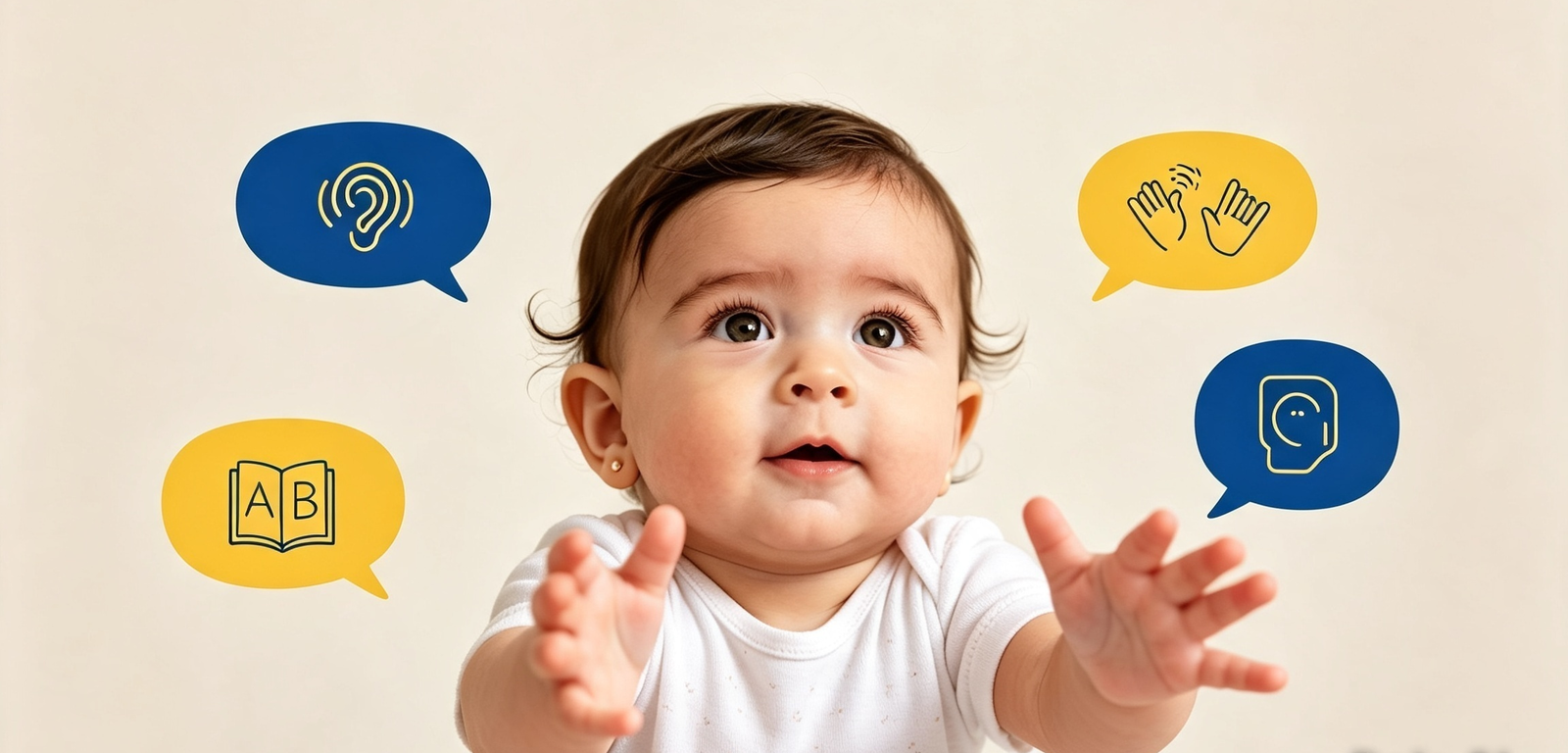
Talk with your baby throughout the day. When changing diapers, describe what you are doing. When walking around the house, name the objects you see together. Respond to their babbles as if you are having a genuine conversation. Read picture books, sing gentle songs, and repeat the words they are trying to say. Try to limit screen time: screens cannot replace the real, face-to-face connection that speech needs to flourish.
Signs to discuss with your pediatrician
Every baby speaks in their own time, but it is always helpful to seek guidance if, by around 12 months, they do not babble repetitive sounds, do not use gestures to communicate, do not respond when you call their name, or do not show interest in connecting with you through eye contact or sounds.
Some babies speak early, while others prefer to listen, observe, and understand everything before expressing themselves out loud. Try not to compare your little one's pace with other children. What truly matters is the bond between you: every conversation, every song, and every shared look paves the way for the words to come.
Turn information into action. Access our planners, checklists, and digital tools to have everything you need to organize your motherhood journey in one place.
My Pregnancy Journey – Planner
https://pay.hotmart.com/A107528781GFirst 90 Days Survival Kit for Your Baby.
https://pay.hotmart.com/S107517788L